Thursday, May 6, 2010

The Addiction to Taking Classes

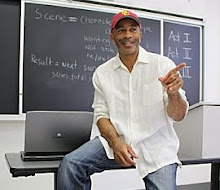
About five years ago I was teaching an advanced feature film screenwriting class at USC film school.  It was the second semester and against the policy for this class, I opted to let the students turn in a feature or a television pilot.

One of my students, named Molly, decided to write an episode of one of her favorite shows, called ‘Entourage.’  She was a sure ‘A’ student, very intelligent and a very gifted screenwriter.

I sat down at home, clicked my favorite ‘red pen,’ opened her teleplay and commenced to evaluate her performance.  When I finished the teleplay, I put down my ‘red pen’ and thought long and hard about what I was going to say to her.

The next week I was teaching her class and I knew what I was going to say to Molly during the first break.  I waited for her to come out of the bathroom and I ushered her to the side.  I asked her what her plans were for the future.  She said she was only a junior and she was going to complete her senior year and then try to get an internship at a studio or network.

I listened intently, and then asked her who was paying her forty thousand dollar tuition per year.  She said her parents were paying her tuition.  I took a deep breath and told her that she should save her parents the forty thousand dollars.  I told her she should not return for her senior year of film school.  I told her she was wasting her time and her parent’s hard earned money.  I told her she was the most talented student I had had in my four years of teaching screenwriting at USC film school.

She stared at me with open mouth shock as I raised her teleplay and said she was ready to go out there and get a job.  I told her I would support her efforts as well as I could.

That summer I hired Molly to be my assistant.  I paid her well and I got to see another side of her.  She was so smart and gifted, and she was a bit lazy.  Things came too easy for her.  That didn’t concern me because her talent was going to break down some doors.

Molly opted to complete her senior year.  I was happy for her.  She got her well-earned degree from a prestigious film school.

Since my encounter with this young woman with unlimited talent, I have met several other talented writers who take class after class after class.  One person that I know to be addicted to taking classes aroused my curiosity.  One day I peeked at one of her screenplays.  She was a really good writer.  She had good training along the way.  Someone had taught her well and she had learned.

This little blog is not to discourage screenwriters from taking classes.  One day I will open a screenwriting academy and like Zaki Gordon, my academy will only be a one-year program.  The first semester will be to learn how to write screenplays and teleplays and the second semester will to complete a screenplay or teleplay.  At the end of the year I will make sure that my students have been properly trained and prepared to go out and make a career of screenwriting.  Although now I can only teach on a limited basis because of my own career,  I still feel like my students should learn and do well.  Several of my students have gone on to sell pilots and get jobs.  A couple of my students are formidable superstar writers or showrunners.

My successful students have taken my classes, I’m sure they’ve sprinkled in a few other classes (despite my warnings to be weary of failed writer teachers).  However, their success has been based on their willingness to stop taking classes and get out there to show their work.

One of my favorite producers, Gil Cates, told me once, ‘it doesn’t take but a second to lose your place in line in Hollywood.’  He was right.  Anyone who leaves or opts to delay their getting out there will lose their place in line.

In conclusion, for all you future screenwriters, this is my advice. Take a class from someone who knows how to teach.  (I feel only working screenwriters who have done it are the best teachers.  I apologize to all you failed screenwriters who now charge a fortune for your classes.  Most of you are snake oil sales people.)  Then you must write a screenplay, let a professional give you an evaluation, and finally, get out there and get in line (with your screenplays).

Friday, April 30, 2010

Staffing Season

It’s hard to explain staffing season, but I will give it an all-American effort. A long time ago I was hired by a ‘major’ producer to write a movie based on a true story. It was one of my most notable accomplishments as a young writer back in the day. I was really in the big time. It was big time money with a big time producer.

I was flown first class to a small town in Maine. I was to follow around this person I was to ink a movie about and soak up as much from him as I could. The story was about his unique experience in the military. He had been on national television, ‘Sixty Minutes’ and even ‘Oprah.’ After several weeks of research, I commenced to writing this famous person’s story and finally produced a first draft. The big time producer and his cronies read my first draft. A story notes meeting was called. I was excited. I knew it was going to be a tedious, page by page notes session, but I was so excited because I believed I had crafted a masterpiece.

I waited in the conference room and the big time producer and his cronies arrived. The big time producer got his assistant on the intercom and told her to hold all his calls for the next few hours. I got out my script, note pad, pen, and braced myself.

For the next 4 hours I was berated and just put through the wood shredder. This big time producer raked me over the hot coals. He told me the script was a piece of crap and he said I was the worst writer he’d ever experienced at my level. He said I should give all the money I made back.

I sat there and the misery and pain was unbearable. I could not wait to get out of there, get home and throw the noose over the rafters. It was by far the worst experience for me as a young writer, early in my career. My reputation took a tremendous hit. When a noted producer starts telling other noted producers, agents, directors, school teachers, and taxi drivers, how bad this writer he hired was, the town caves in on you.

This experience was not nearly a fraction as painful as waiting through staffing season and not getting pick up for a show.

I loathe staffing season with every molecule of my body. You have to sit for 3 months and hear every day, that a new show is up and running and two of your friends are on it. And when the entire season goes by and no one wanted you and you receive not one offer, you feel a thousand times worse than getting cut from a ball team, or not getting a date for the prom, or not asked to the big party that everyone was invited to but you.

Not getting a show during staffing season cuts through a writer’s self-esteem like a hot knife through butter. Even when you are writing a movie and you are getting checks in the mail, the buzz around town about who got picked up and what shows are being slotted in for May pickups, wears you down to a stub.

I really believe, truly, that if you asked one hundred writers, which was more painful, your mother’s unexpected death or not getting a staff position for a show during staffing season? I promise you, any writer who has been on a television show would say, ‘not getting staffed.’

My mother died unexpectedly and I’m still not completely healed. May my mother rest in piece. I loved her more than life, however, I’m closer to being healed from the loss of my mother, than the year I didn’t get a staff position as a writer after three straight seasons of being on a show. Staffing season is a bitch.

And if you are lucky enough to get hired on a new or existing show, there is no higher high than the first day you set foot in the writer’s room. You take your seat, you look out the window, and you feel so sorry for those poor, miserable, bastards that are out in the bitter cold of not being on a show.

Saturday, April 10, 2010

The Chicago Screenwriter's Network

My maiden voyage to Chicago got off to a less than stellar beginning. My luck completely changed when I met several members of the Chicago Screenwriter’s Network.

I looked forward to conducting a workshop. Columbia College had not jumped for joy when I arrived, but the Institution was gracious enough to let me use their facility to host a workshop.

Ninety-nine point nine percent of the enrollment of my workshop was members of the Chicago Screenwriter’s Network. I must go on record to say, of my near half dozen years of teaching at a major (Southern California) film school, and several workshops and appearances, the best audience I have ever had was the Chicago Screenwriter’s Network.

These folks are warm, polite, knowledgeable, enthusiastic, and just down right good people. Most of them have written several screenplays and taken several workshops and classes. It’s as if they cannot get enough experience and exposure to writing feature films and television pilots.

They took copious notes and asked questions that showed me they were right on point, and willing to accept any knowledge I could impart. They were as colorful as a Benetton ad. They came in all shapes and sizes. The common denominators were their courteous manner and their thirst for screenwriting techniques and stories.

When any teacher stands in front of students who are sponges for information, it is rewarding beyond explanation. The more they wanted, the more I was willing to give. At one point, I felt I needed to take a breath and not try to cram so much information Hollywood screenwriting experience into a few short hours. Fortunately, I would turn to this audience and they held pens at the ready over notepads.

Some of my students have gone on to be more successful than me. I wanted the same for each and every member of the Chicago Screenwriter’s Network.

I wanted to mentor them into instant Hollywood fame. I still do. I want to be the bridge for each and every one of them to walk over into stardom.

My own Hollywood story is not completed. I have several irons in the fires with noted studios, networks, and production companies. Part of me wants to stop time, so I can devote myself to the Chicago Screenwriter’s Network.

They say, to truly give back, one needs to send the elevator back down for someone else to come up. I hope there is room for all the members of the Chicago Screenwriter’s network.

Maiden Voyage to Chi-Town

The first leg of my trip to the mid-west was a bit of a roller coaster ride. The ups and downs started with a chance meeting with an earth angel as my plane touched down on the cold, windy, city of Chicago. The parting was a very understated, “give me a call if you need any help navigating your way around the city.”

I gave a smile along with a “thank you, I’m sure I’ll be fine” to the earth angel.

I was eager to get things going, and more eager to find Columbia College because of it’s incredible reputation of pumping out an assembly line of ‘Academy Award’ winning graduates.

I was hoping my reception was going to be as enthusiastic. Unfortunately, my arrival was less than a ripple. No one actually knew I was coming. Columbia College students have made more than a splash in tinsel town. The faculty must be littered with brilliant and inspired professors. Where were they?

When I inquired as to why no one seemed to care that a Hollywood screenwriter (with a modicum of successful experience selling screenplays, pitches, and working on television shows) was visiting, I was told that only one faculty member was willing to let an award-winning screenwriter from Hollywood teach her class. Did the other faculty members feel my IMDB credentials were not enough to warrant more than one class? Oh, well. I had to accept that none of the professors felt I needed a red carpet with scores of trumpet players.

Anyway, notwithstanding, I had a terrific experience with the one class I was able to teach. The students were eager as well as intelligent. I only wished that I could have met a few more of them. I did manage to convince a few of them that film is indeed the ‘director’s medium’ and television is the ‘writer’s medium.’ I mounted my charges with explicit diagrams and personal testimonials that I scrolled across the white boards. That was a kick.

So, I decided to hold onto my tiny little victory and I looked forward to conducting a workshop on the upcoming the weekend. I was going to make a splash, even if only one student showed up.

I checked my calendar and saw that I had a few days to kill in the meantime.

My only problem was that I didn’t have the wheels, I didn’t know the public transportation system, and I didn’t know which direction I was facing or heading. Luckily, the earth angel called to see how my first visit to her city was going. I told her I was a little boxed in at the moment. The snow was plenty and my knowledge of Chicago was less than plenty.

Wouldn’t you know it, the earth angel did what typical earth angels do. She volunteered herself as my private chauffer. She picked me up and drove me North and South, East and West around Chi-town.

I understood some of the magnificence of this cultural town. My marvel was only a tiny bit thwarted by being covered in snow. I let my imagination fill in the blanks. What I did manage to see was captivating.

Chicago is a beautiful city. Even to the undeserving screenwriter from Hollywood.

Zaki Gordon Institute for Independent Filmmaking

Is anyone ready for an alternative for the 30 and 40 thousand dollar tuition fees at some of the film schools in America? If you could send your child or yourself for that matter, to a film school with incredible facilities and faculty for less than 5 thousand dollars, would you?

Here comes my first endorsement of a film school in America. The Zaki Gordon Institute for Independent Filmmaking is the bomb!!!

These folks really have it going on. I have toured the facility, spoken to the students, and had lunch with some of the faculty. This place in Sedona, Arizona should receive ten out of ten stars.

The practical, hands-on training, at Zaki Gordon has managed to bridge the gap between the theory of managing a film career and actually having a film career. If you want to learn how to ride a horse, don’t just read about it -- go and jump on one at your local dude ranch.

If you want to learn the ends and outs of film making -- go to Zaki Gordon. Google the name, go visit the place. Enrollment is only 40 students. The program is only one year. I’m telling all my students right now, this place is the real deal.

Like I’ve said in past letters, emails, and blogs – I have very few regrets in my career. Well, add just one to the list. I regret not knowing about the Zaki Gordon film school. If I was starting my career over, and I wanted to take a year to learn how to write and make films, I’d point a human cannon toward Zaki Gordon, jump in and light the damn thing.

Tuesday, February 9, 2010

The oracle that is David Mamet

Being a keynote speaker in Chicago at the ‘Black Romance Film Festival’ means I will inevitably be asked, ‘what was it like to work with David Mamet?’

How to answer that question?  The mind swirls.  It is akin to asking, ‘what was it like to take golf lessons from Tiger Woods?’ Or, ‘what was it like to shoot jump shots with Michael Jordon?’ Or, ‘what was it like to take batting lessons from Ernie Banks?’

Of course you can never assume any of the greats could teach anyone to do what they do or did.  Magic Johnson wasn’t the best coach.  Can Jack Nicholas teach a golf swing?  Maybe or maybe not. Like I mentioned, not all greats can teach.

Working with David Mamet as an aspiring writer did offer some unique challenges.  For example, when he spoke to me, it was nearly impossible to scream ‘Captain my Captain.’  Or when he paid me a compliment, I had to resist jumping into the air and clicking my heels or breaking into a ‘River Dance.’ When he was disappointed, I wanted to excuse myself, go for a long walk and resist hurling myself in front of a car.

Yes, a most difficult answer to the question, ‘what was it like to work with a Pulitzer Prize winning writer, I mean David Mamet?’ Lets see, where to begin?

He was tough, sometimes unyielding.  I recall him telling me to go rewrite my episode within three hours or I was fired.

He was funny.  Mamet is probably one of the best joke tellers in history.  Once in a while he’d let fly some of his life experiences working with some of the great directors, producers and actors.  We’d all be on the floor, howling.

He was generous.  One time he stopped me in the hallway and asked me if I had a quarter.  I resisted screaming in his ear, ‘yes, Captain my Captain, I do indeed have a quarter in my pocket.’  I scratched my head, reached into my pocket, and brandished a quarter.  Mamet took it and placed a beautiful knife in my hand.

Another time, he stopped my girlfriend and me at our staff Christmas party.  He told her that I had come a long way and my last episode was one of the best of the season.  Man, did I get some loving that night.

He was gracious.  Mamet would be the first to stand and offer his help to the Fed Ex delivery person.  He opened doors for assistants.  He was polite to unknown actors who came in for an audition, some of whom were so nervous they hardly got their lines together.  I heard countless stories about Mamet politely asking them to relax and try again.

He was religious.  He went to temple almost daily.

He was disciplined.  He studied martial arts, practiced all the time.  He wrote every day.  His episodes came in twice as fast as anyone’s on our staff.  Often, he’d turn in his episode and finish a play on the same weekend.  I know, cause he told us.

He was aloof and often cut straight to the chase.  I once asked him how to write a play?  He gave me a gentle smile and said, ‘ just go write.’  Man that was a long ass, humbling, turn and walk away.  It felt like ten years to move two feet.

He was a leader.  Sometimes he rallied the cry, ‘writers in the writing room, right now.’  One day he closed the door and said, ‘today I’m going to teach you all how to write.’  This didn’t go over well with the Emmy nominated, award winning senior  writers on the staff.  I quietly got out my pen and started taking notes.  Screw it, I wasn’t gonna miss getting that speech into my journal.  As a matter of fact, I still have it and look at it almost daily.

What was it like working with David Mamet?  It was probably the most inspiring and rewarding experience in my life. I had a modicum of success as a writer before I met Mamet.  I had written for noted actors and actresses such as Sidney Poitier, Mary Louise Parker, Lynn Whitfield and Diane Wiest. It wasn’t until I met David Mamet that I learned how to write.  Yes, he sometimes shouted, sometimes threatened to fire me, but the pearls of wisdom that flowed from the man’s mouth were mind boggling and came in bundles.  Imagine a trunk load of gold coins falling from the sky, crashing in front of you had but a few moments to gather them up.  That’s what it was like being a writer in the writers’ room with Mamet.

He talked about scene structure, dialogue, plot, and what makes drama.  I listened, and  I took copious notes at the expense of other writers thinking I was a kiss ass.  I was.  Mamet was teaching and I soaked up as much as I possibly could.  I learned and I learned big.  The best news is no one will ever be able to take it away from me.

Every day Mamet stood up and asked for the writers to come into the writer’s room, I’d smile, look up and say, ‘I’m getting paid for this, unfriggin’ believable.’

Yes, I was paid to work with the best writing teacher on the planet.  It didn’t cost me twenty thousand dollars a semester, like at some of the most celebrated colleges in the country.  All I had to do was show up and listen.  Take that Harvard, or Stanford.  I got to go to the school of Mamet.  And I got paid for it.  How do you like them apples?  It is true that not all the greats can teach.  Mamet could teach my dogs to write.  All they’d have to do was listen, maybe take a note or two.

Monday, February 1, 2010

How do you get your script read.

HOW TO GET YOUR SCRIPT READ

The old days when someone could pick up the phone and say:

‘Hi, Sid.  This is Nancy.  You’re an agent, right?’

(Pause)

‘Yeah, Nancy.  I’m an agent.  I’ve got million dollar clients and lots of toys.  What can I do for you?’

‘Actually, Sid – my cousin’s son is a screenwriter.  I heard he was good.’

‘No worries, fly him out, send him in, I’ll take care of him.  He’ll have a three pilot deal by the end of the week.’

‘Thanks, Sid.  You’re the best.’

‘No worries, Nancy.  Call any time.’

These days are so long gone.  It’s all linked under the same category now; prehistoric.  When I first started writing screenplays, all you had to do was write well.  Tell someone you know you wrote a script and then the universe shifted enough for you script to fall into the hands of someone who cared and could do something about it.

This is exactly how it went for me:

(The telephone rings)
‘Hello?’

‘Sterling.’

‘Yeah, Micah.’

‘I heard you wrote another script.’

‘You heard right.’

‘Dude, you’ve got balls.  Matt said your first script was a stinker.’

‘It was.’

‘So, when can I read the new one?’

‘Try never.’

‘Dude, come on.  I’m one of your best friends.’

‘Micah, you are one of my best friends.  Honestly, you’re a Minch.  But a secret keeper, you are not.’
‘Sterling, come on, dude.  Let me read it.’

‘Okay, Micah.  But I swear.  If you let one single person read one single syllable, I will hunt you down and strangle you with my bare hands.’

‘Sterling, dude, you’re being a little dramatic.’

‘You’re right.  I’m sorry.  You’d probably be harder than hell to strangle.  I’ll stab you in your sleep.’

‘Geez, dude.  Just let me read the damn script.  I’ll tell you if it’s a stinker.’

‘Okay, but for your eyes only, right?’

‘Sterling, you worry way too much.’

(Pause)

‘So, are we going drinking tonight?’

‘Micah, how come whenever we go drinking, you always end up kicking some guys ass, and I have to take on the beat down guy’s whole crew?’

‘I’m a little hot tempered.’

‘You are.’

‘So, I’ll pick you up at eight?’

‘Okay.’

(TWO DAYS LATER THE TELEPHONE RINGS)

‘Hello, is this Sterling Anderson?.’

(Pause – big worry, panic, and then)

‘Yes, this is Sterling.’

‘Can you hold for Michael Besman?’

(Clueless)

‘Okay.’

(Pause)

‘Hello, Sterling?’

‘Yes.’

‘This is Michael Besman, senior vice president of TRI-STAR PICTURES.’

(Holy shit)

‘Yes.’

‘When can you come in and talk about the script Micah gave me?’

Okay, people.  This is no lie.  I remember it like it was yesterday.  How could I forget my first meeting with a big studio executive?  That was how easy it was back during the days the dinosaurs roamed the earth.

Today, getting your script read is harder than ever.  The portal closes more and more each day.  One day soon, there will be an atom named, ‘chances of getting your script read.’

K – so I work in the business of screenwriting.  People ask me all the time, ‘how do I get my script read, by someone at least remotely connected to the industry?’

Here’s how you do it.

First, right a great script.  Not a good script or decent script.  Write a great script.  Somehow, what shows up on the page eventually cannot be denied.

When you’ve written a great script, try to find a way to make that same great script a pilot sample.  

Feature scripts are read at least ninety-five percent less often than pilots.

IF YOU WANT TO BE A SCREENWRITER – WRITE FOR TELEVISION.

I’ve told my students this over and over again.  Television is the screenwriter’s medium.  Feature film is the DIRECTOR’S medium.  Most of my students manage to ignore this simple, undeniable fact, until they get really desperate to be employed as a screenwriter.

There are over 160 pilots sold ever year.  Very few of them make it to the air, but you only need to sell one to get into the game.  And if you don’t sell your great pilot, you have a good chance of getting an agent, manager, or a job, if it is truly good.

Features don’t work that way.  If you write the perfect feature script, you will not see a dime until it has been through the malaise of gauntlets all perch to shred any hopes of it getting to a big name producer, director, or actor.

If your feature gets that far, then it will be successful only when all the biggest players are attached and signed and the money is in place.  The odds of all these elements falling into place are the same standing on your lawn, flapping your arms and flying to the moon.  Anything is possible, yes, I’m a true believer in miracles.

Write the perfect feature film, then start flapping your arms.  See which happens first, a sale or landing on the moon.  I bet you it will at least be close.

So, now you’ve written a great screenplay and you have turned it into a great pilot.  Here is what you do.  

The best option takes a lot of eating of humble pie.

Find a working screenwriter with an agent.  Tell him or her you wrote the best screenplay in the world and you want to piggyback off them to get it read.

What does this mean?

It means, you are willing to include the working writers name on the title page.  Either by giving them co-written by credit, or at the very least, you are willing to give them story by credit.

If your great script is that great, very few working writers will turn you down.  And very few working writer’s agent will turn you down.

This is only under the assumption that your script is great.

I have personally piggybacked at least three young writers into stardom.  This is why.  A great script never makes anyone look bad. Yes, all writers want the world of screenwriting to be about them and only them.  But a great script only makes everyone look good.

Yes, it might annoy the hell out of your agent or manager.  They all get very queasy when your name turns up on a script you actually didn’t write.  But if it is truly a great script, they (agents and managers) see dollar signs.

All right, so you don’t know one single working writer and you wrote a great script.  Go find an assistant on a television show or a development person and beg them to read your script.

Most all assistants on television shows are the next working writer on that show.  They have nothing to lose or gain by reading your script.  Unless it’s a really bad script.  They will hunt you down because they will never get that valuable time back.

Assistants have power.  The reason they got the job as an assistant is because they are related to someone powerful, which makes them powerful.  The other reason they have power is that someone powerful was sweet on them enough to hire them.  Now they run that powerful person’s life.  If they tell their powerful boss that they read a great script, before the end of the week, that that powerful boss will read script.

All right, so you don’t know an assistant.

Find a development person at the producer, studio, or network level.  Their sole mission in life is to find a great script for as cheap as possible and get it to their boss.  Yes, that is a development person’s mission statement.

Find the head of development or assistant head of development of any film or television company, send them lots of cookies, candies, and the beverage of their choice.  Sweet talk them until they conceade into reading your great script.

Note: No one reads more than 5 to 10 pages of any script unless it grabs them.  All great scripts grab the reader within 3 to 5 pages.

All right, so you don’t know any working writers.  You don’t know any assistants or development people.  You are on your last leg.  Here’s what you do:

Go do some intensive private investigating and find an upstart literary manager.  Please, note – not an established literary manager, but one on the verge of breaking out.

The reason they are not established and only on the verge is that they are looking for the next great script.  How do you find them?  Only by doing massive amounts of investigating and inquiry.

Young managers are hungry and they are the few creatures who need a great screenplay in order for the other elements and dreams of their lives to fall into place, including big money, a big house, a big office, and marriage to the big supermodel.

If you exhaust the above scenarios there are no guarantees, but it will at least increase the chances of your script making it from Idaho to Hollywood.